2 hr
Temple of Heaven Park Admission & Tour Options
- Entry ticket
- Mobile voucher
- Valid same day
- Free cancellation
Temple of Heaven — Reserved Entry & Imperial Heritage Tours
Where Ming emperors prayed for harvest, visitors now walk ancestral pathways at dawn
Compare fares, pick the fit — all bookings are mobile-voucher and eligible for free cancellation where shown.
2 hr
8 hr
Visitors planning a trip to this UNESCO heritage site must choose between simple park access or comprehensive temple of heaven tickets that grant entry to the iconic inner ceremonial structures. Selecting the right option ensures you can explore the historic imperial altars and prayer halls at your preferred pace.
| Park Admission Base Entry |
Top pick Combo Ticket Full Access |
|
|---|---|---|
| Access Level | Park grounds only | Park grounds and inner structures |
| Included Structures | None | Hall of Prayer and Circular Mound Altar |
| Flexibility | Valid for park entry | Requires timed slot for interiors |
| Booking Requirement | Recommended for weekends | Essential for all visitors |
| Best for | Morning exercise enthusiasts | First-time Beijing landmarks visitors |
| See tickets & prices |
Verdict: For those seeking the full Beijing attraction experience, booking temple of heaven tickets tour options that include interior access is the most rewarding choice.
Worth it for history enthusiasts and first-timers
The standard 15 CNY park entry grants access to the sprawling grounds where locals practice tai chi at dawn and the iconic three-tiered Hall of Prayer dominates the skyline, but you'll only admire these UNESCO-listed structures from outside. Temple of Heaven tickets that include interior access (typically 34 CNY during peak season) unlock the Hall of Prayer for Good Harvests, the Imperial Vault of Heaven, and the Echo Wall—spaces where Ming and Qing emperors performed solstice rituals. For travelers invested in imperial history or architectural details like the ceiling's intricate dragon-and-phoenix carvings, the 19 CNY premium delivers tangible value. Casual visitors content with exterior views, morning exercise atmosphere, and the Circular Mound Altar (accessible on grounds-only tickets) can skip the all-inclusive option. The grounds alone offer a serene retreat from Beijing's urban pace, especially before 09:00 when tour groups arrive. Mid-day crowds inside the halls can dilute the experience, making early arrival essential for those purchasing full access.
Bottom line: Spring for the all-inclusive temple of heaven tickets if imperial ritual spaces matter to you; otherwise the grounds alone justify the 15 CNY entry.
Hand-picked experiences loved by thousands of travelers
2 - 8.5 hours
Free Cancellation
Explore ancient imperial worship sites, admire Tibetan Buddhist treasures, and stroll UNESCO gardens
3 hours
Free Cancellation
Experience Beijing's imperial worship site with entry to the park's most significant sacred structures
10 hours
Free Cancellation
Discover China's imperial legacy with expert-led visits to three of Beijing's most iconic landmarks
Flexible timing
Free Cancellation
Explore Beijing's magnificent imperial worship complex with entry to all principal monuments
4 hours
Free Cancellation
Skip sold-out tickets and explore Beijing's UNESCO-listed imperial worship complex at your own pace
2-3 hours
Free Cancellation
Explore Beijing's sacred temple grounds dressed in authentic Hanfu or Qing Dynasty robes
1 hour
Free Cancellation
Learn ancient martial arts movements and mindfulness techniques in one of Beijing's most iconic settings
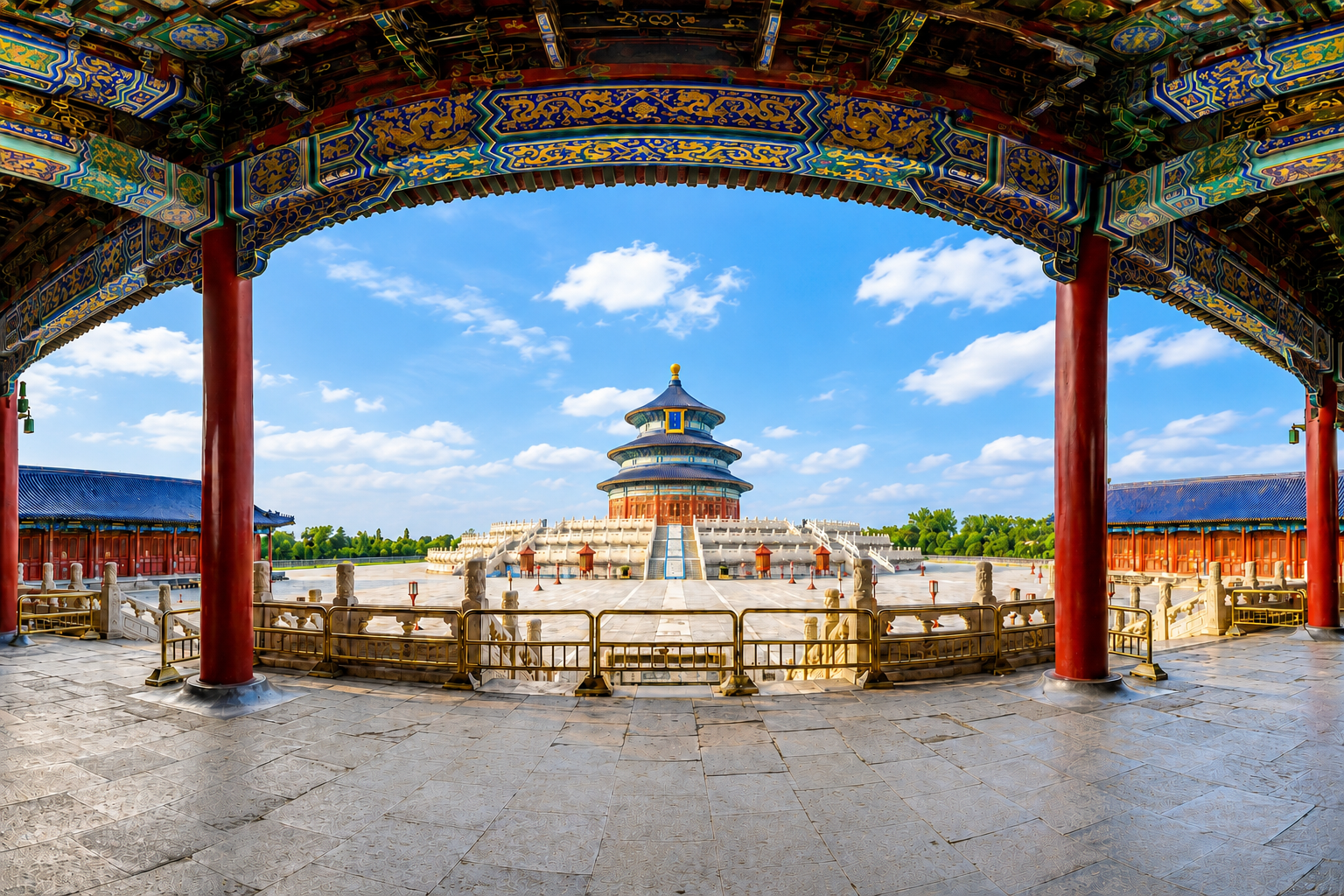
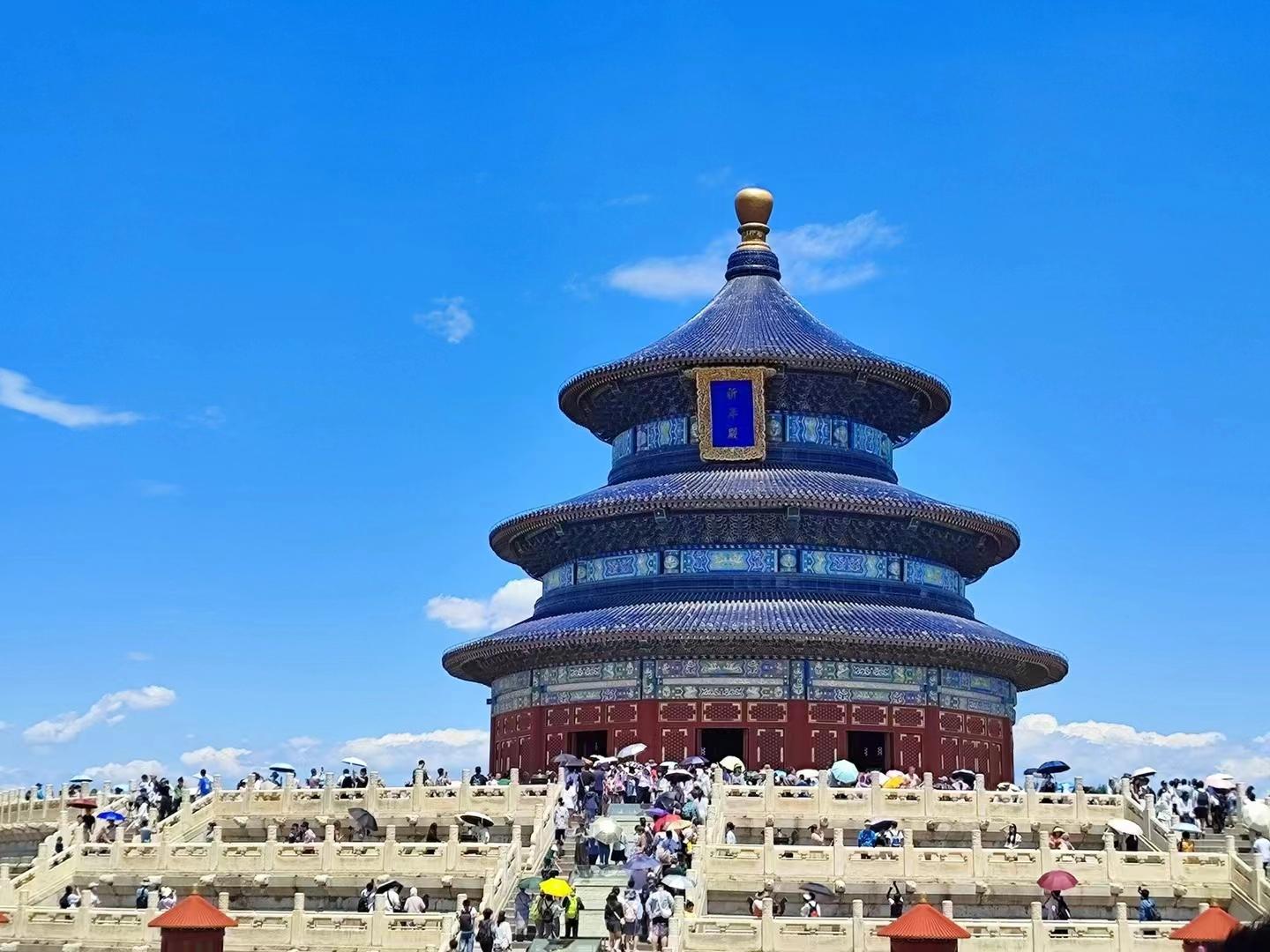
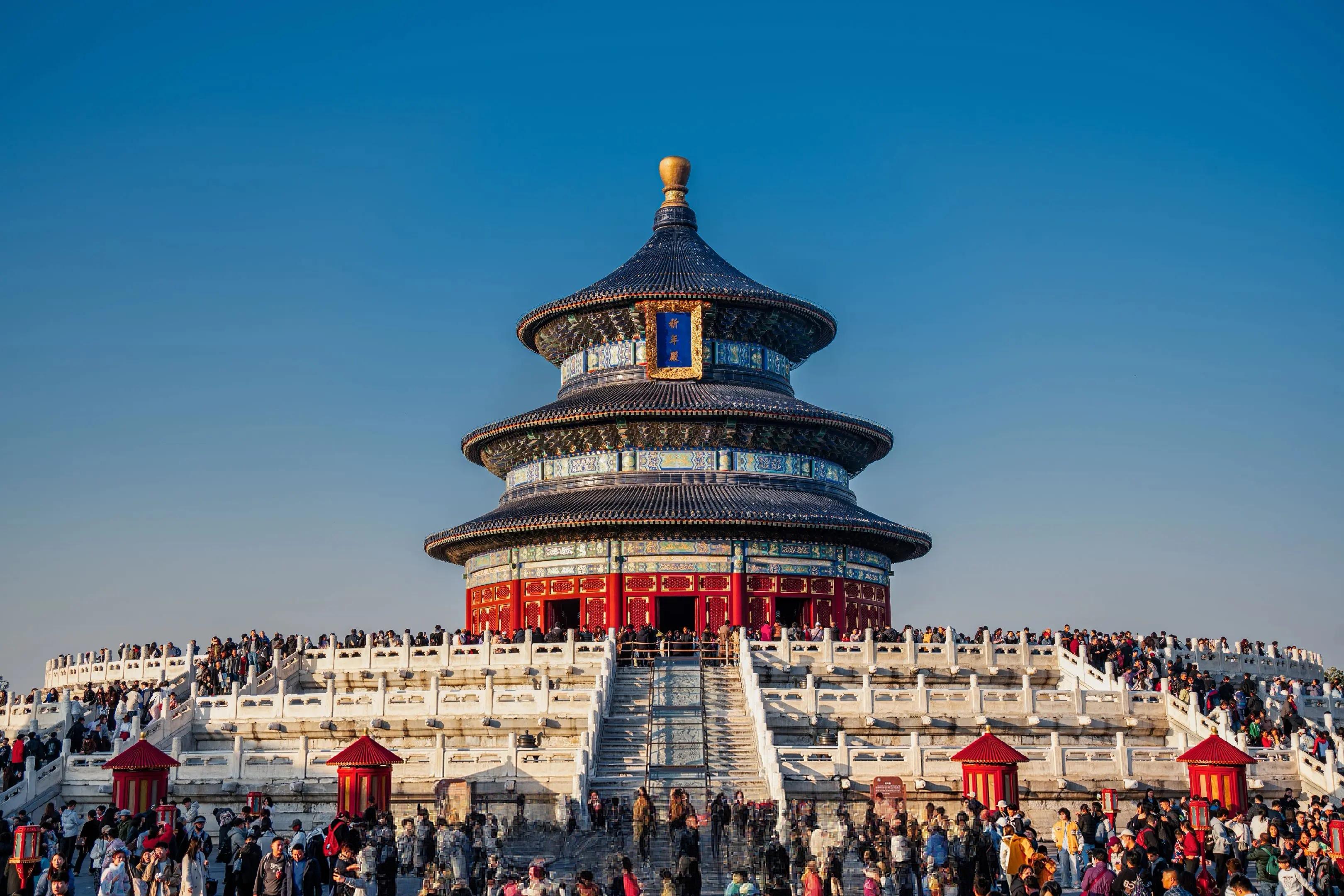
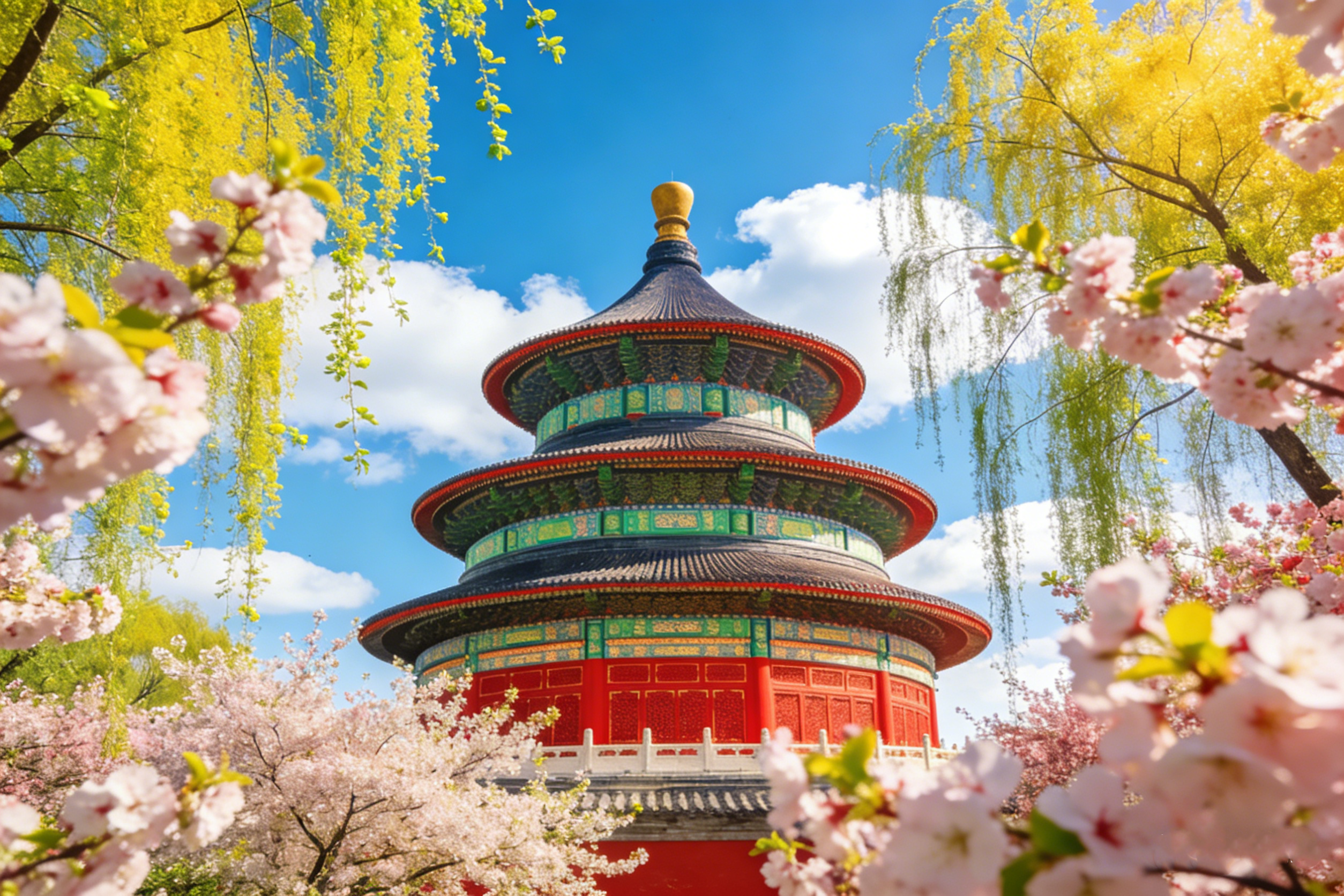
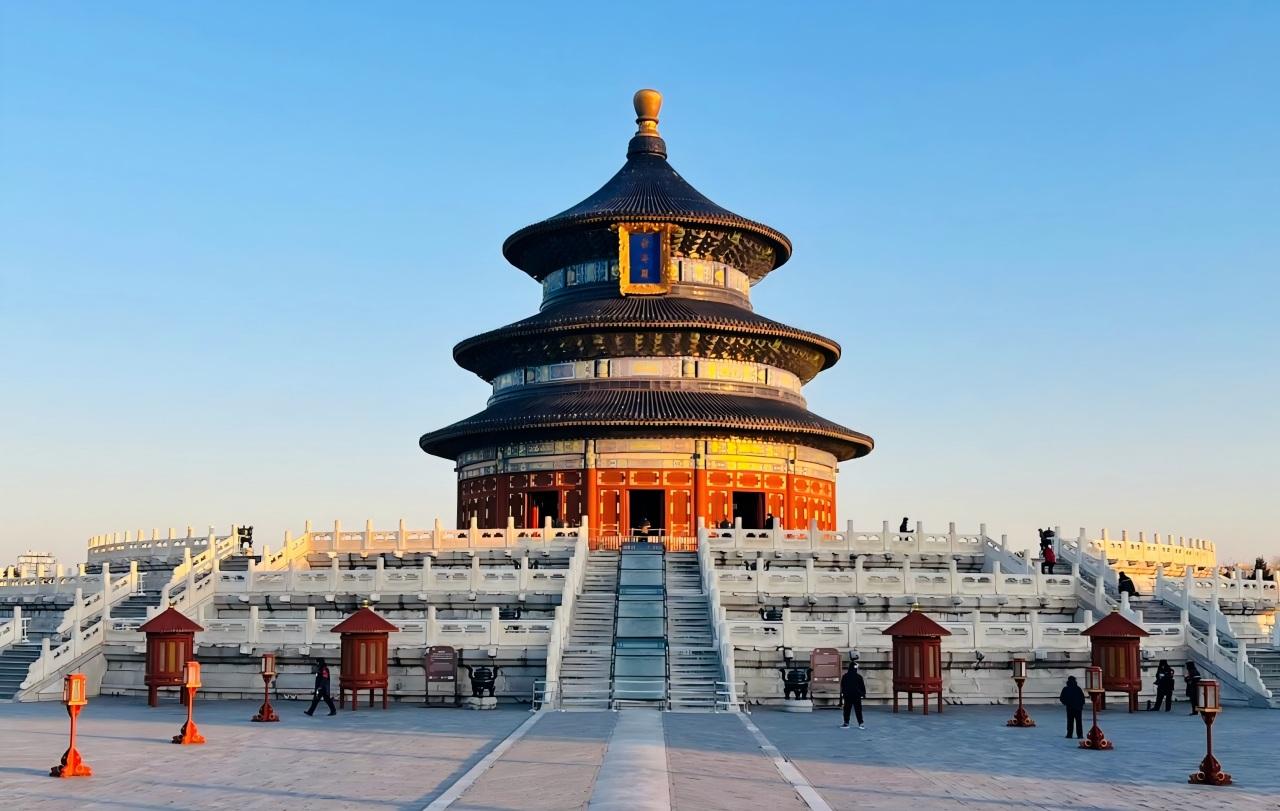
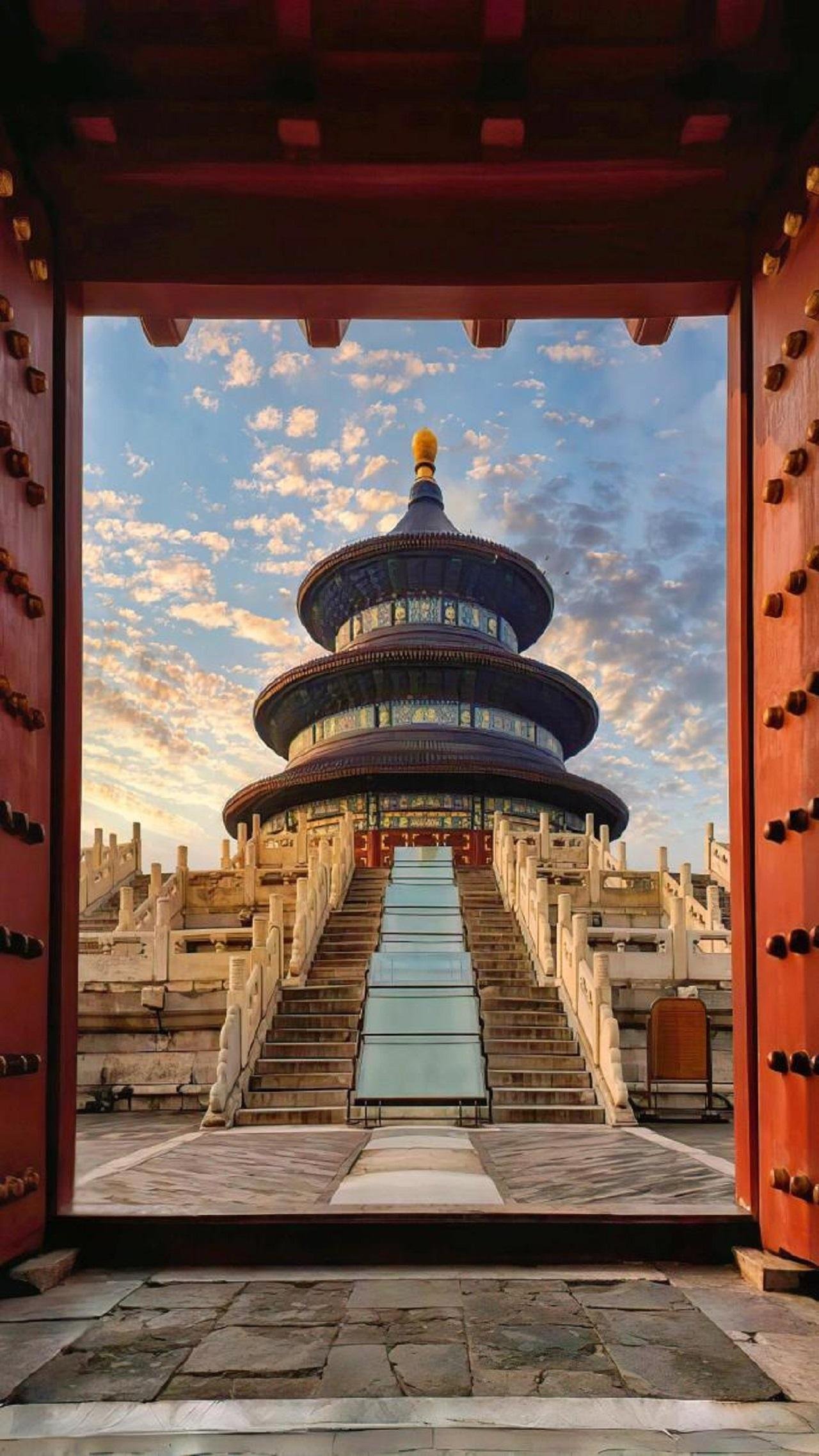
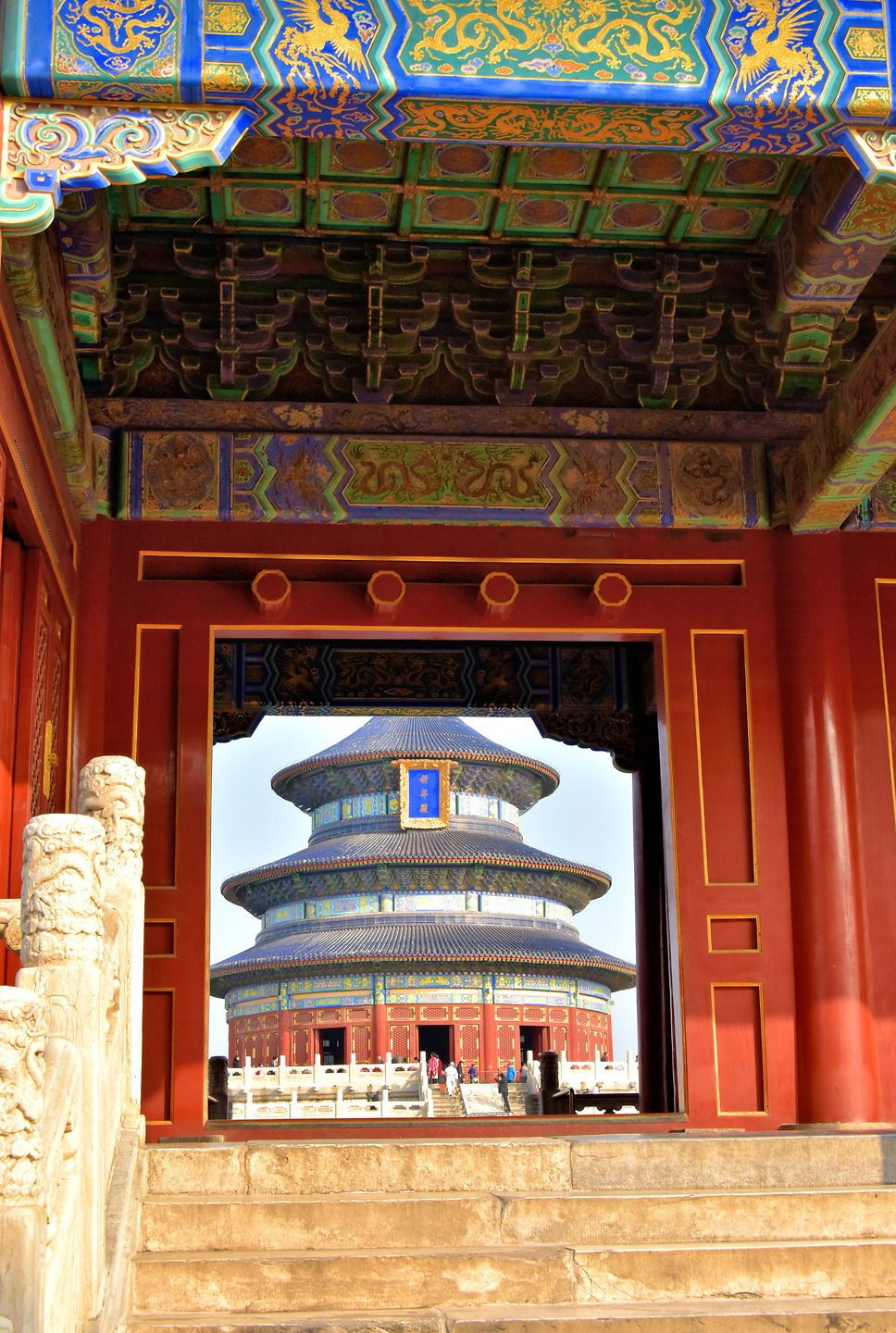
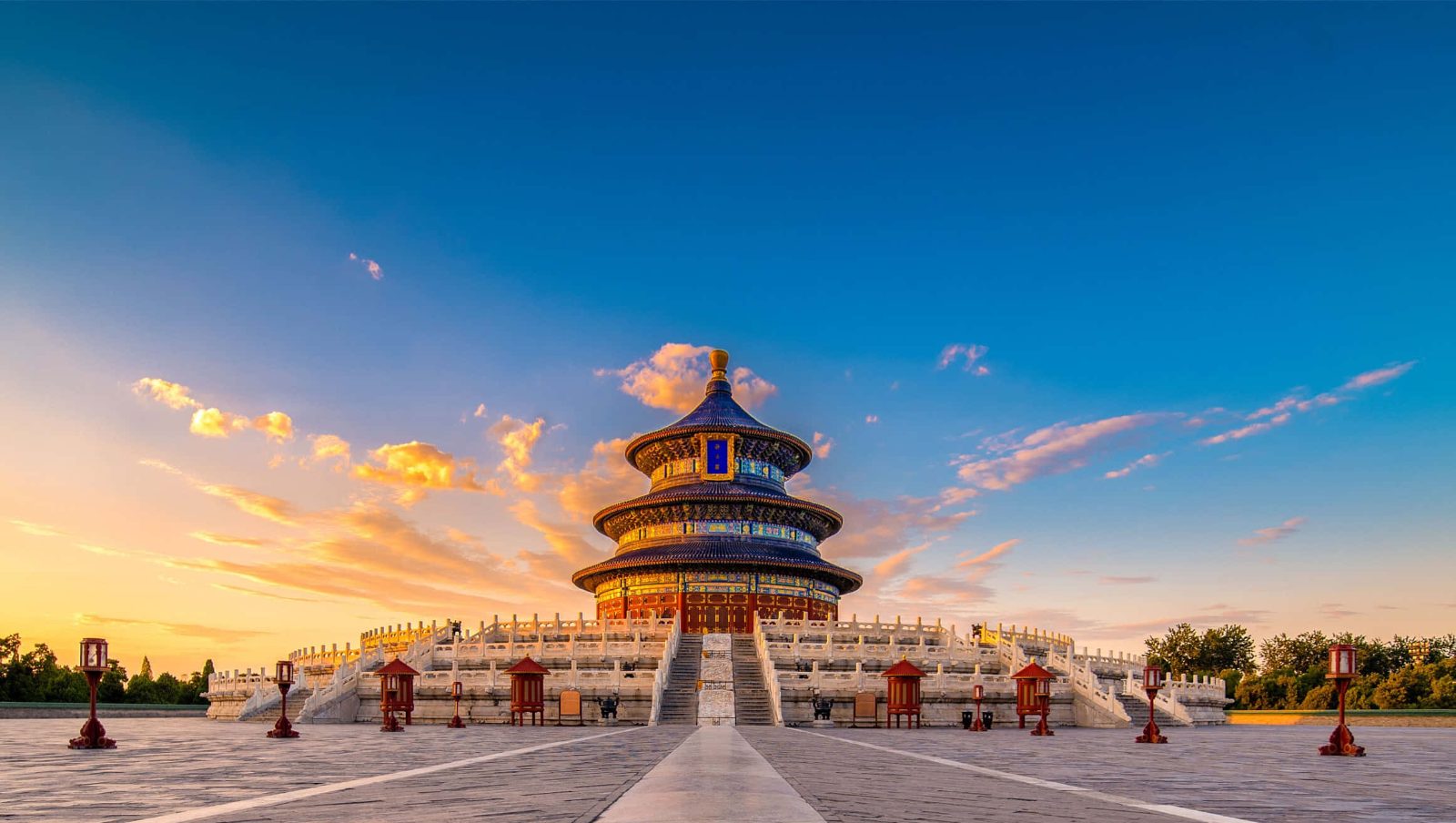
This triple-gabled circular building stands on three levels of marble stone base. It remains the most iconic structure in the complex and represents imperial connection to the heavens.
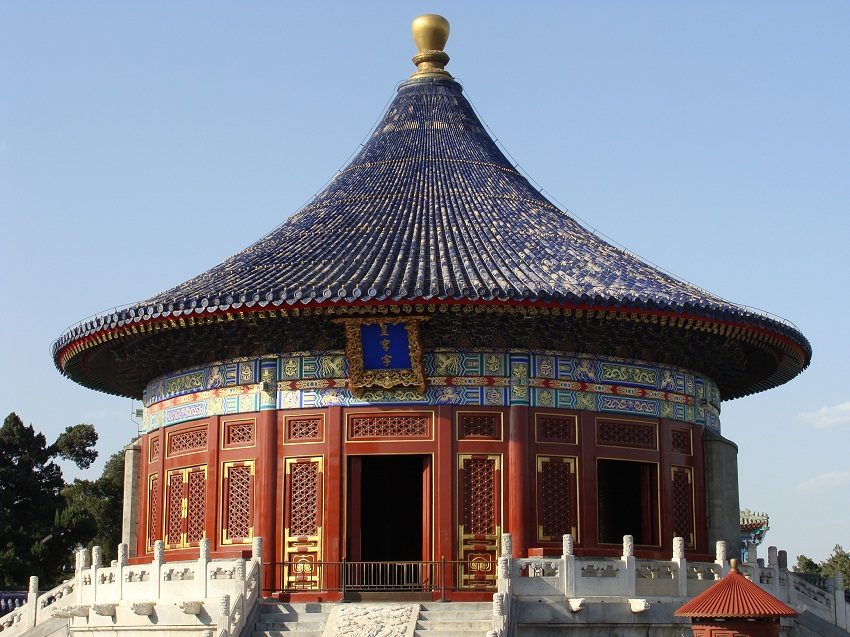
This smaller circular hall is surrounded by a smooth wall that carries sound over long distances. It was used to store the spirit tablets of the emperors.
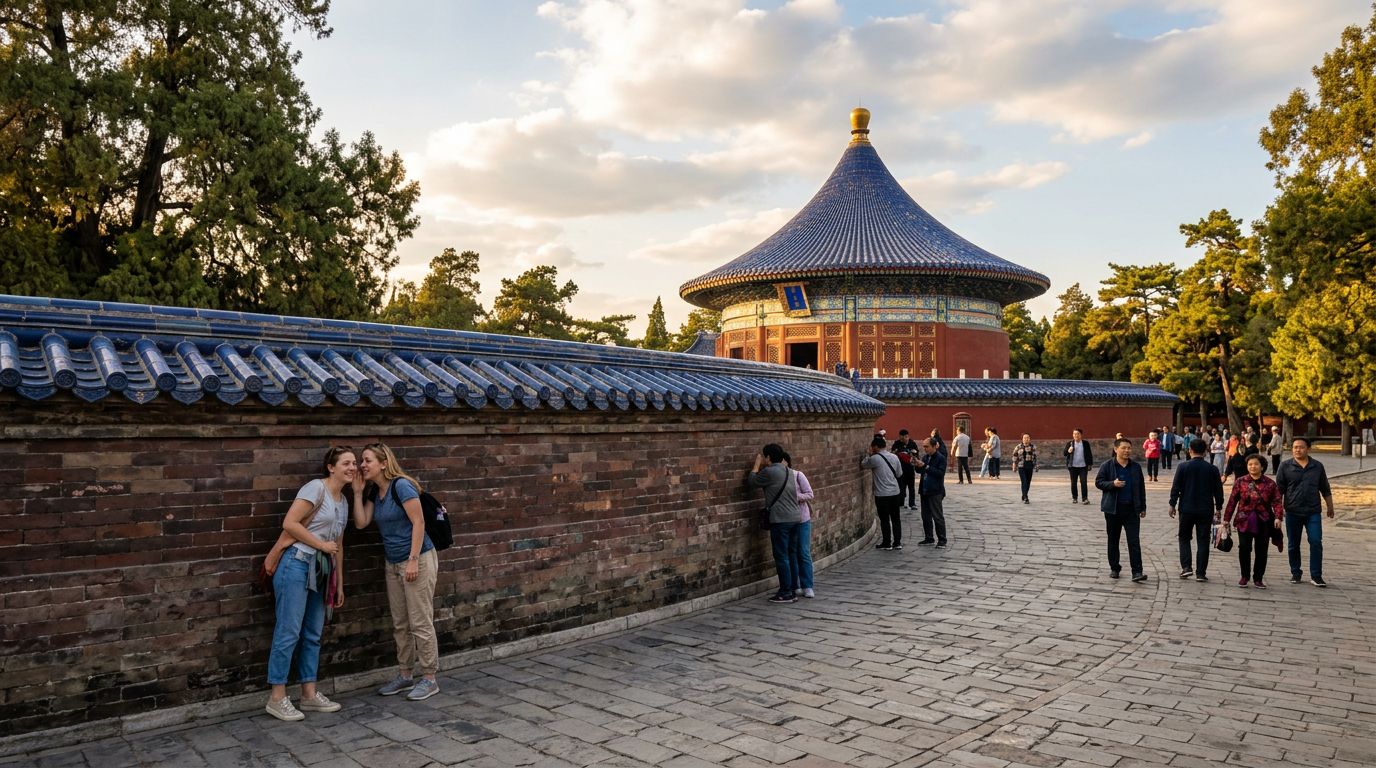
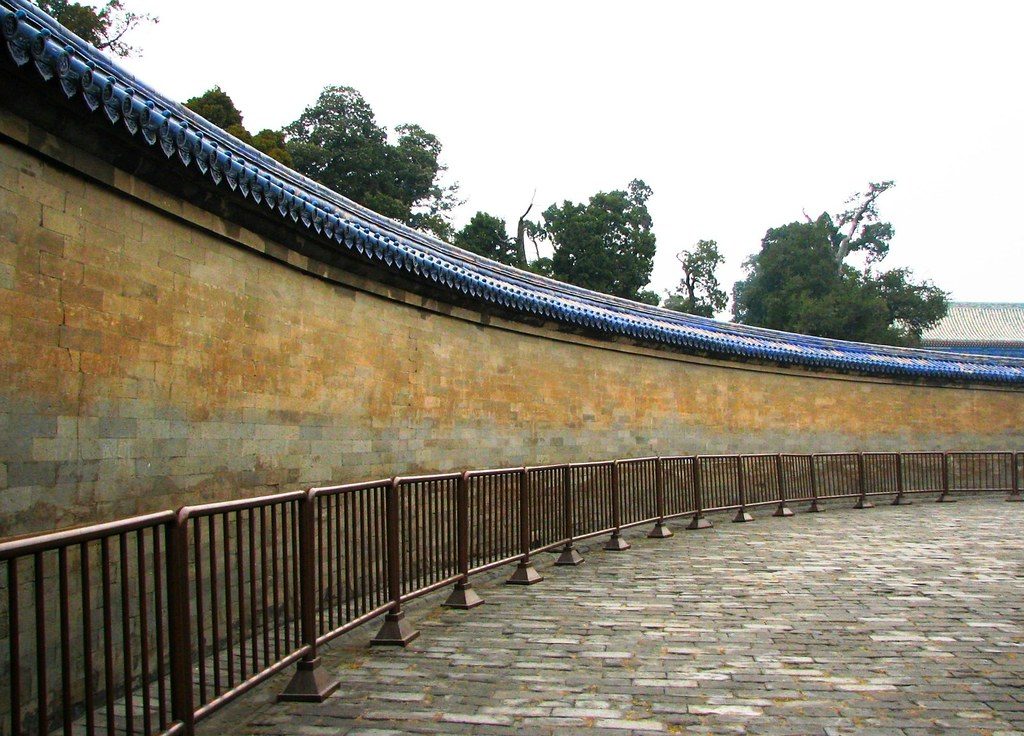
This circular wall encloses the Imperial Vault of Heaven and exhibits unique acoustic properties. Visitors can whisper into the wall and be heard clearly on the other side.
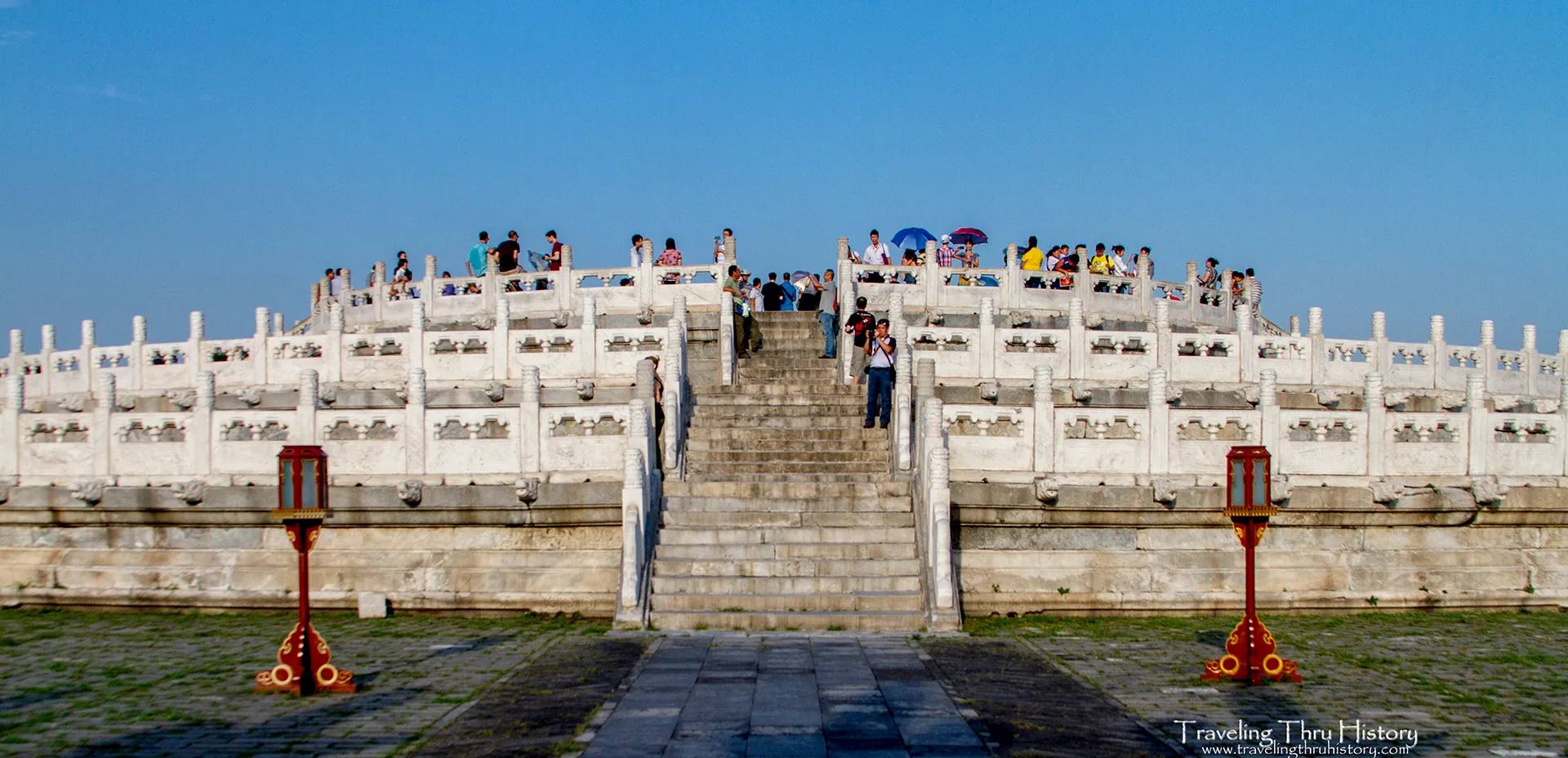
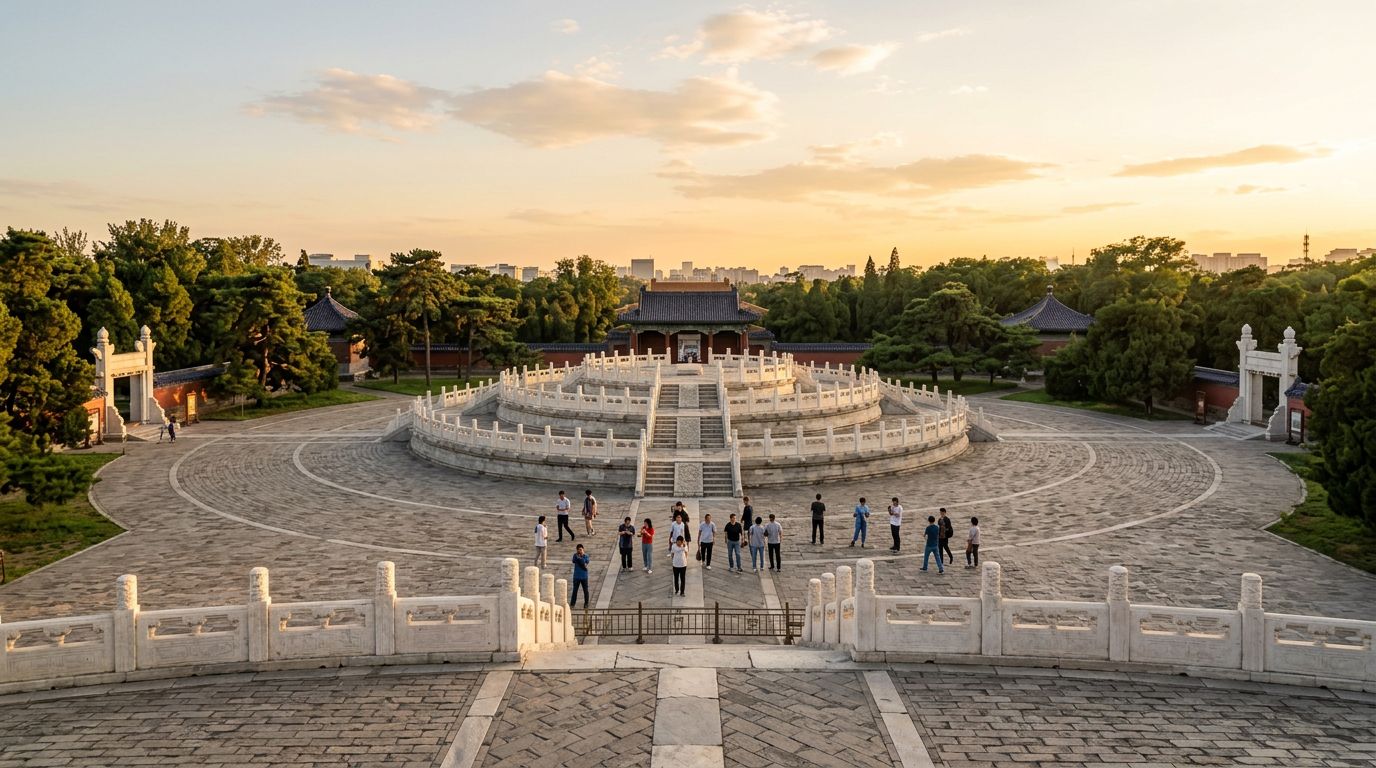
This is a triple-tiered circular platform built from marble stones. It served as the primary site for the emperor to perform winter solstice rituals.
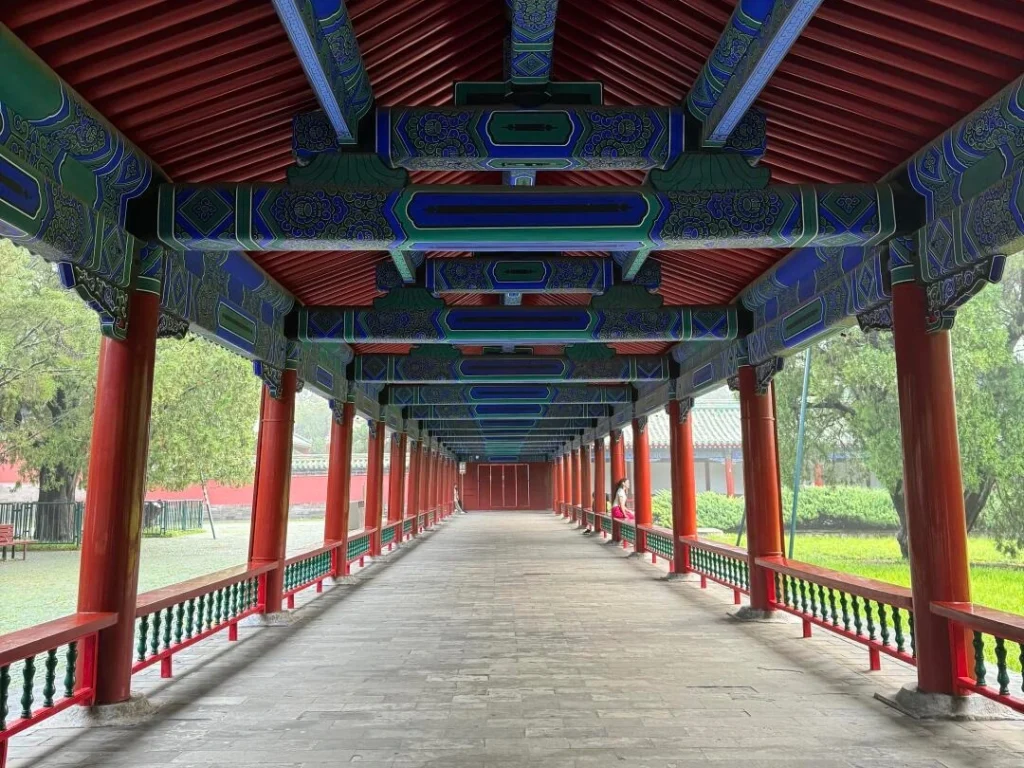
This covered walkway connects the different areas and serves as a social space for locals. It spans 350 meters in length and provides shade for those strolling through the park.
You enter through the East Gate before dawn, when the park's 273 hectares belong to tai chi practitioners and sword dancers. The first cypress grove opens onto the Circular Mound Altar — you stand at its center stone and clap once, hearing the echo return from the marble tiers.
Early light catches the Hall of Prayer's blue tiles as you approach from the southern axis, its 38-metre silhouette sharpening against the sky.
Inside the hall, you count the 28 pillars representing lunar mansions, the inner four dragon columns supporting the central coffer. The scent of old wood and recent lacquer mingles in the circular space. You trace the Echo Wall's perimeter, testing the acoustic curiosity that carries whispers across its 65-metre diameter. By eight o'clock the northern courtyards fill with organized groups, so you retreat to the western pine walks where Jiajing-era trees shade stone paths. The exhibition hall near the Imperial Vault displays original timber samples and seismic joinery diagrams — you spend twenty minutes decoding construction methods that survived six centuries of tremors. Before leaving, you photograph the triple gates from the southern approach, their layered thresholds framing the main axis in a single compressed view.
All the details about your upcoming adventure in one place
Temple of Heaven tickets grant access to Beijing's most significant Ming Dynasty religious complex, where emperors performed ceremonial rites for good harvests. This UNESCO World Heritage masterpiece features the iconic circular Hall of Prayer with its triple-gabled roof and intricate wooden construction built without nails. Temple of Heaven tickets tours include the Imperial Vault of Heaven, Echo Wall, and surrounding cypress groves that have stood for centuries.
The Hall of Prayer for Good Harvests rises 38 metres without a single nail, its triple-eaved cone of blue glazed tiles visible across southern Beijing's skyline since 1420.
Emperor Yongle commissioned the complex during the Ming Dynasty's third year at the capital, establishing a ceremonial axis where sovereigns would perform solstice rites until the Qing abdication in 1911. The circular hall rests on a three-tiered marble terrace, its interior supported by 28 wooden pillars representing constellations and the lunar calendar.
Today the 273-hectare walled precinct draws scholars and morning exercisers alike. The Echo Wall encircling the Imperial Vault carries whispers across its diameter, a quirk of Qing-era acoustics that remains testable at low-traffic hours. The Circular Mound Altar, paved in concentric rings of nine stones, demonstrates cosmological mathematics embedded in architecture — each ring's count a multiple of nine, the imperial number. These structures survived the Boxer Rebellion's destruction and subsequent restorations with their original proportions intact.
UNESCO inscription in 1998 recognized the site's representation of Ming and Qing ritual philosophy, where heaven and earth met through constructed geometry. The complex's north-south layout mirrors celestial order: square walls symbolize earth, round altars heaven. Cypresses planted during Jiajing's reign still shade the western pathways. Conservation work in the 2010s stabilized foundations and replaced weathered roof tiles using traditional kiln methods.
Visitors accessing Temple of Heaven tickets Beijing can observe restoration techniques in the exhibition halls flanking the Hall of Prayer. Original timber samples and architectural drawings document centuries of earthquake-resistant joinery. The southern axis, less trafficked than the main northern approach, offers clearer views of the triple gates and their symbolic thresholds. Peak season Temple of Heaven tickets price remains among Beijing's accessible heritage entries, though early arrival secures space before tour groups converge after nine.

The Hall of Prayer for Good Harvests rises 38 metres without a single nail, its triple-eaved cone of blue glazed tiles visible across southern Beijing's skyline since 1420.
Casual clothing is appropriate for exploring the extensive grounds. Visitors should wear comfortable walking shoes as the park covers a large area.
Security screening is mandatory at all park gates. Large luggage should be stored off-site as the Temple of Heaven does not provide storage lockers.
Photography is permitted throughout the public park areas for personal use. Professional filming requires prior authorization from the management office.
The park is spacious and safe for children to walk and explore. Strollers are recommended for younger children due to the long distances between major monuments.
Main pathways are paved and relatively flat, allowing wheelchair access to most outdoor areas. Some historical structures have raised thresholds that may limit interior access.
Small kiosks are available for light snacks and bottled water inside the perimeter. Visitors are encouraged to bring their own hydration for longer walks.
Opening Hours
06:00–22:00
Address
No.7, Tiantan'neidongli, Dongcheng District, Beijing
Entry
Standard park access required
Best Window
06:00–09:00
Navigation
Tiantan Park grounds
Requests for temple of heaven tickets must be submitted within the operator window for a partial refund. The standard 15 CNY admission ticket for park entry is generally non-refundable once activated.
Recommended time
3-4 hours
Allocating half a day allows for a thorough exploration of the Echo Wall and the Hall of Prayer for Good Harvests without rushing. Obtaining temple of heaven tickets provides access to the vast park grounds, where walking paths and cypress gardens require significant time to traverse. Visitors planning temple of heaven tickets tours should anticipate longer durations if they intend to walk the entire perimeter or explore the UNESCO heritage site in detail. Those seeking temple of heaven tickets tickets for a quick walkthrough can focus on the central axis to manage their time efficiently.
Crowd levels through the day
The Temple of Heaven rose from the ambitions of the Yongle Emperor, who ordered its construction in 1406 alongside the Forbidden City as part of his campaign to legitimize Ming rule after usurping the throne. Completed in 1420, the complex originally bore the name Temple of Heaven and Earth, serving dual cosmological functions until the emperor commissioned a separate Earth altar in 1530. The site's architectural geometry encoded imperial theology: the square bases symbolized Earth, the circular roofs represented Heaven, and the three-tiered Altar of Heaven aligned with the ancient doctrine that odd numbers belonged to the celestial realm. Every winter solstice, the emperor ascended alone to the uppermost marble platform to offer burnt sacrifices and report the year's events to Heaven, a ritual so sacred that commoners faced execution for witnessing it. The Qing dynasty inherited these rites intact after 1644, but Emperor Qianlong executed the most ambitious renovations between 1749 and 1751, rebuilding the Hall of Prayer for Good Harvests after lightning destroyed the original triple-gabled structure in 1889. The reconstruction required twenty-eight massive nanmu pillars shipped from Yunnan, each representing a cosmological unit—four for the seasons, twelve for the months, twelve for the traditional time divisions. The lacquered ceiling bore a gilded dragon coiled around a mirror orb, symbolizing the emperor's mandate as the sole intermediary between Heaven and the mortal realm. By the late nineteenth century, foreign delegations began sketching the complex during tense treaty negotiations, and photographs from the 1900 Boxer Rebellion show Allied troops camped inside the sacred precincts, a desecration that foreshadowed the end of imperial temple of heaven tickets access restrictions. The Last Emperor Puyi performed the final state sacrifice in 1914, three years after abdication, as a symbolic courtesy extended by the Republican government. The complex opened as a public park in 1918, though the Hall of Prayer remained closed until 1949. UNESCO inscribed the site in 1998, citing its unmatched expression of the relationship between Earth and Heaven in Chinese cosmology. Today's temple of heaven tickets tours grant access to spaces once reserved for the emperor's solitary communion with the divine, while the Circular Mound Altar still amplifies whispers at its center through acoustic geometry that Ming engineers calibrated for imperial prayers.
Yongle Emperor commissions and completes the Temple of Heaven and Earth as part of Beijing's reconstruction.
Jiajing Emperor separates heaven and earth worship, building a dedicated Earth altar and renaming the complex.
Qianlong Emperor executes major renovations, establishing the architectural form visible today.
Lightning destroys the Hall of Prayer for Good Harvests; reconstruction finishes the following year using nanmu pillars from Yunnan.
Eight-Nation Alliance troops occupy the temple during the Boxer Rebellion, camping inside the sacred grounds.
Puyi conducts the final imperial sacrifice, marking the ceremonial end of 500 years of ritualistic use.
Republican government converts the complex into a public park, though the Hall of Prayer remains restricted.
UNESCO designates the Temple of Heaven a World Heritage Site for its cosmological and architectural significance.
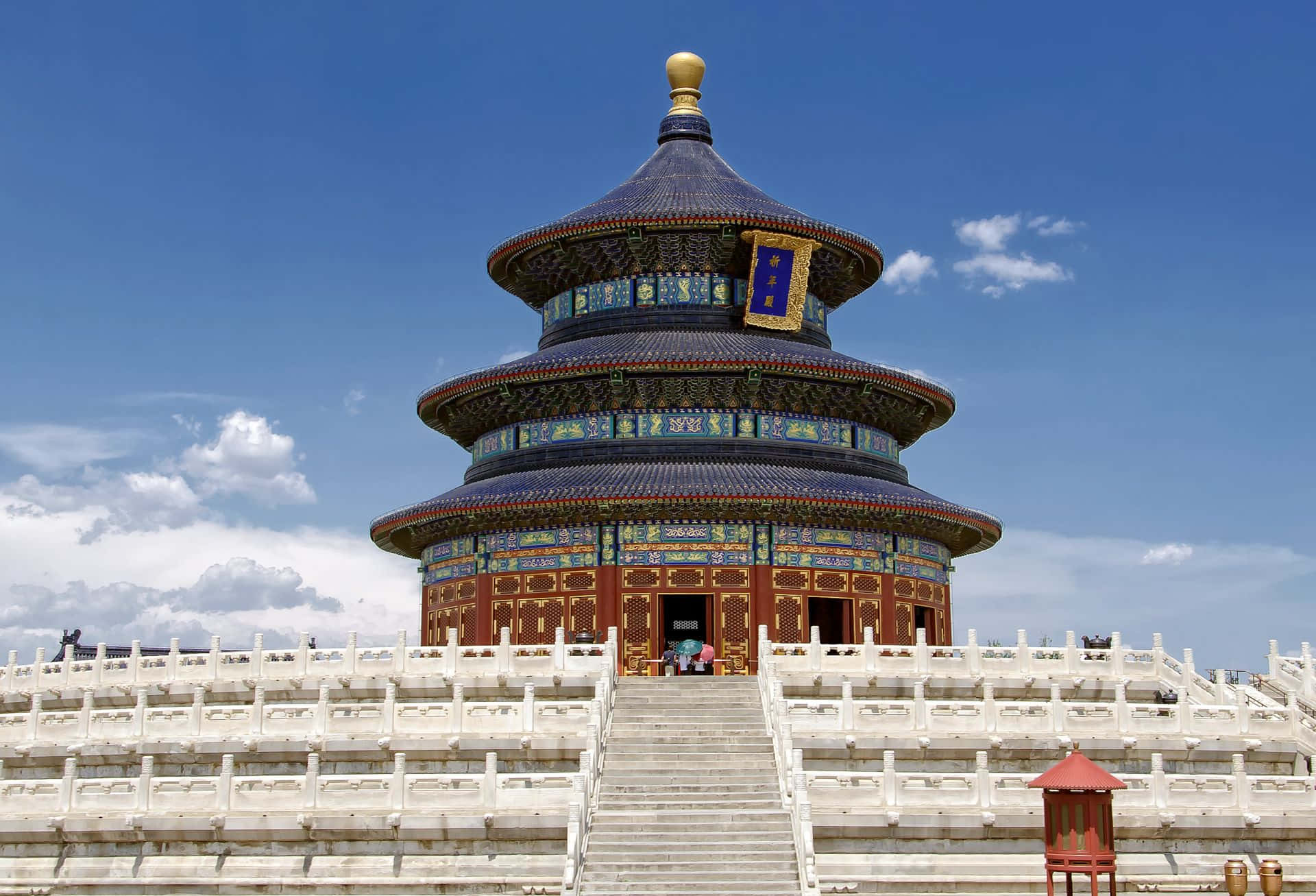
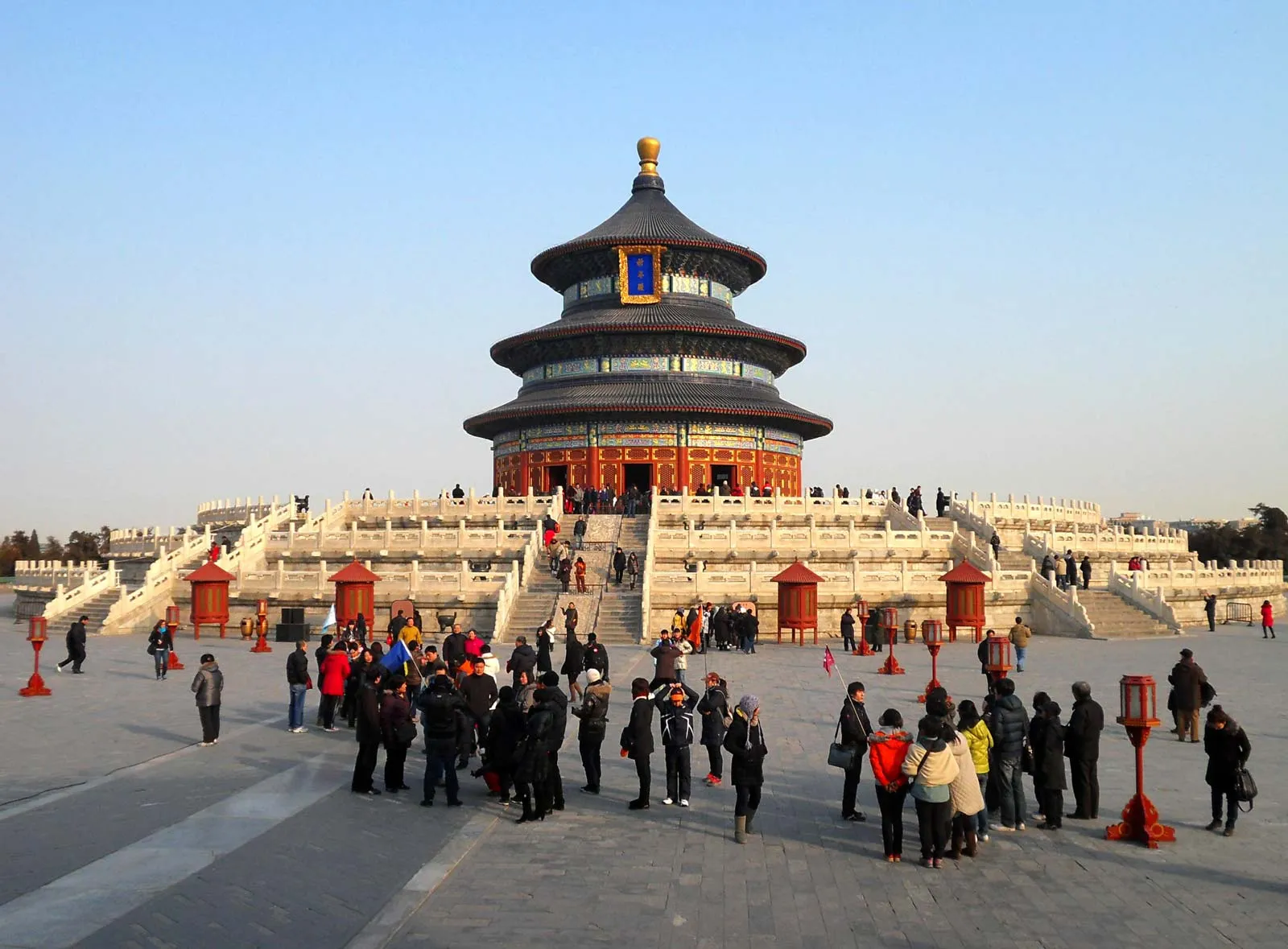
Stand on the central axis south of the hall to capture the perfect symmetry of this iconic UNESCO heritage wooden structure. Framing the triple-eaved roof against a clear autumn sky provides the most distinct composition for those holding temple of heaven tickets.
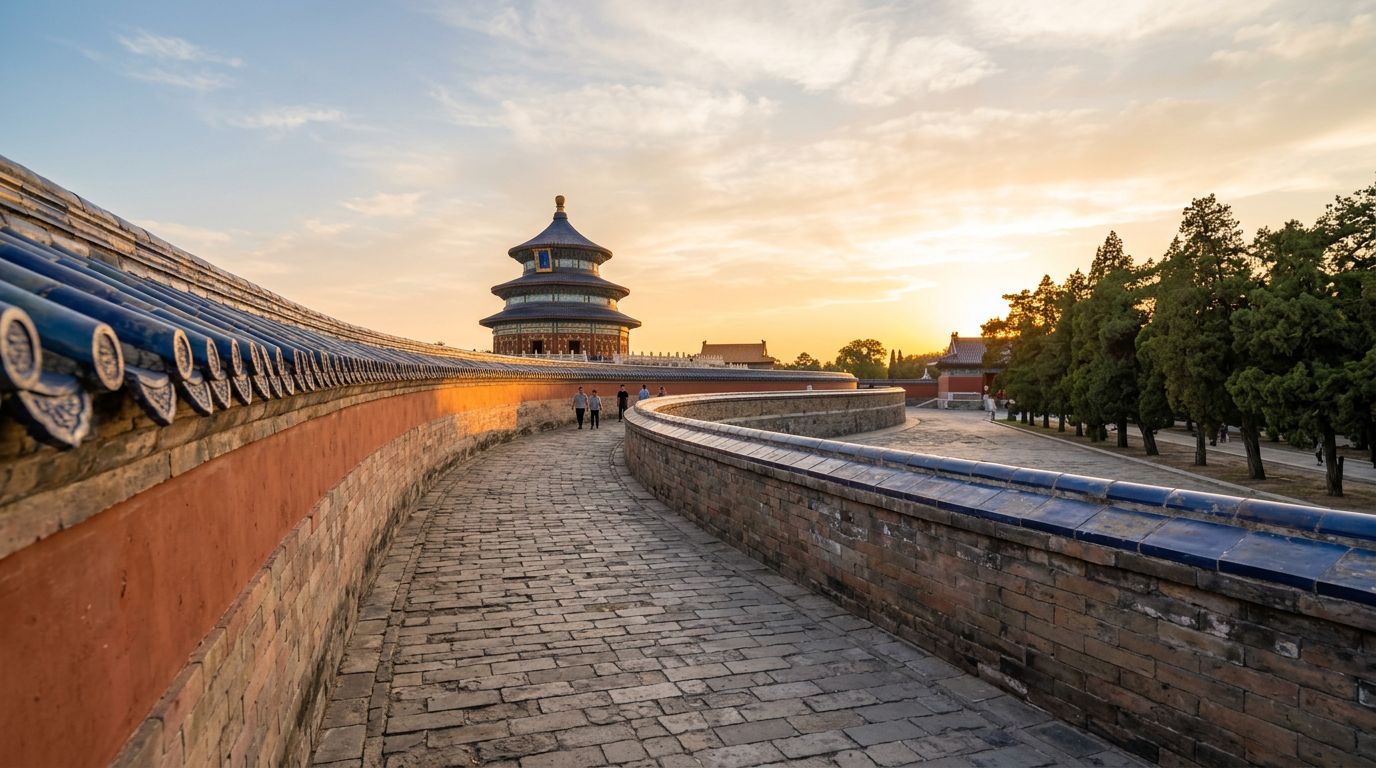
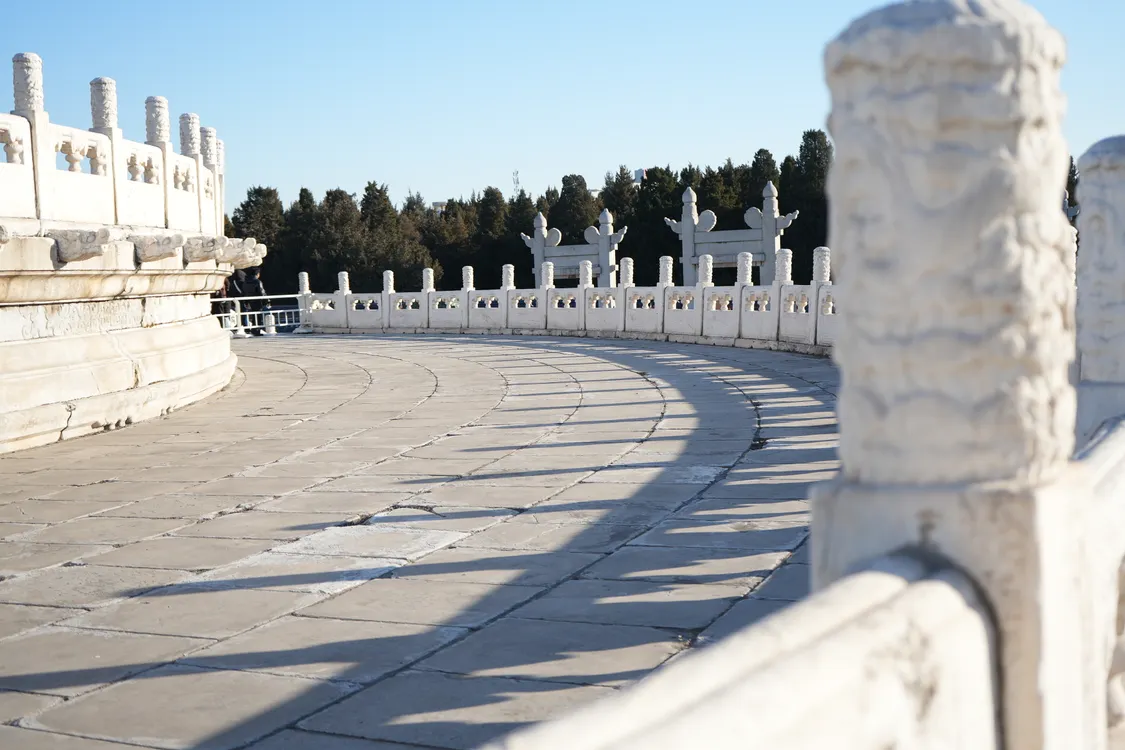
Position yourself along the curved perimeter of the wall to photograph the leading lines that draw the eye toward the distant imperial structures. This location offers a unique perspective of the masonry and architectural scale found in Beijing landmarks.
Capture the rhythmic patterns of the painted beams and pillars within this covered walkway where locals often practice traditional activities. Using the corridor as a frame adds depth to temple of heaven tickets tours photography.
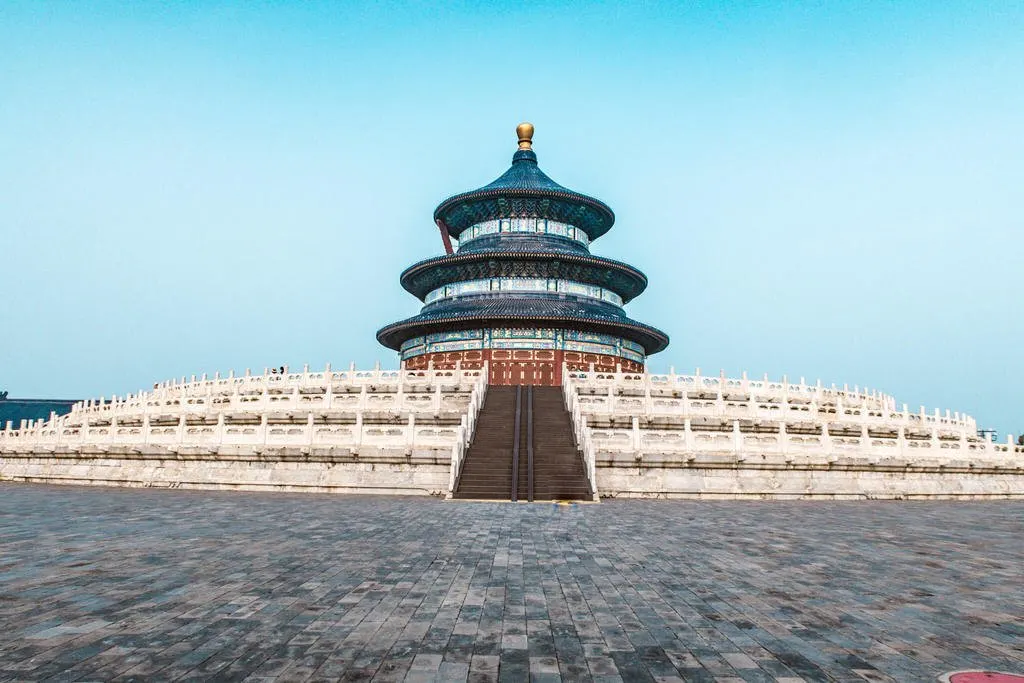
Focus your lens on the white marble terraces to emphasize the geometric precision of this open-air platform. A low-angle shot highlights the ancient stone craftsmanship popular in many temple of heaven tickets tour itineraries.
Real experiences from real travelers
Purchased temple of heaven tickets online the night before and entered through the east gate around 8am. The Hall of Prayer sits on three marble tiers and the scale becomes apparent only when you climb the steps yourself. Morning light catches the blue tiles beautifully. Spent two hours walking the entire complex including the Echo Wall and Circular Mound Altar
Arrived when gates opened to avoid crowds. The cypress groves surrounding the main structures are centuries old and provide welcome shade. Audio guide explained the symbolic geometry of the altars and heaven-earth cosmology. Much quieter than the Forbidden City
Temple of heaven tickets gave access to all pavilions and altars. The wooden brackets supporting the Hall of Prayer roof are held together without nails, which the signage explains in detail. Circular Mound Altar's center stone has unique acoustic properties we tested ourselves. Visit took about three hours at a leisurely pace
The blue-tiled roofs against morning sky create striking photographs. Grounds are extensive so wear comfortable shoes. Some restoration work visible on outer buildings but main structures fully accessible. Local seniors practice tai chi in the northern section before tourist groups arrive
Ticket included entry to Imperial Vault of Heaven where the emperor stored ceremonial tablets. The Echo Wall genuinely works if you visit when crowds thin out around 4pm. White marble pathways connect all major structures through shaded tree-lined routes. Clear English signage at each pavilion
Temple of heaven tickets tours often rush through but independent visit allowed us to linger at each altar. The cypress grove between Hall of Prayer and Circular Mound feels removed from the surrounding city. Marble carvings on balustrades show detailed dragon and phoenix motifs
The geometry of the complex reflects Ming-era cosmology with circular heaven shapes and square earth bases. Reserved temple of heaven tickets through official site to skip ticket office lines. Visited on a clear spring afternoon when the blue roof tiles intensified under direct sun. Audio tour provided historical context for each ritual space
Entered from south gate and walked the same ceremonial route emperors used during winter solstice rituals. The Hall of Prayer interior displays original throne and altar furnishings behind protective barriers. Grounds stay open until 6pm giving ample time to explore all sections without feeling rushed
Tiantan park tickets include access to both the outer recreational areas and inner temple complex. The latter requires separate entry but covers all major pavilions. Marble staircases show wear from centuries of foot traffic. Best light for photography occurs between 7-9am before haze builds up
The Hall of Prayer dome interior reveals concentric wooden rings painted in traditional colors without a single nail used in construction. Temple grounds offer shaded benches between structures for rest. Visited mid-week to avoid weekend crowds and had clear views for photos at each pavilion
Everything you need to know for your journey
The park is open daily from 06:00–22:00.
The entrance fee is 15 CNY for park entry during peak season.
The best arrival window is 06:00–09:00 to avoid mid-day crowds.
Individual temple of heaven tickets are typically valid for one-time entry.
No formal dress code exists, but modest attire is recommended for this sacred Beijing landmark.
Pets are strictly prohibited within the grounds of the Temple of Heaven.
The site is located at No.7, Tiantan'neidongli; use subway Line 5 to reach the area.
Prohibited items include drones, alcohol, and professional photography equipment.
Yes, a valid passport is required for identity verification at the entrance.
Join thousands of happy travelers who have discovered this incredible experience
Book Your Experience Now